
News
Company news, product updates and vehicle testing industry insights from Naiou Electric.
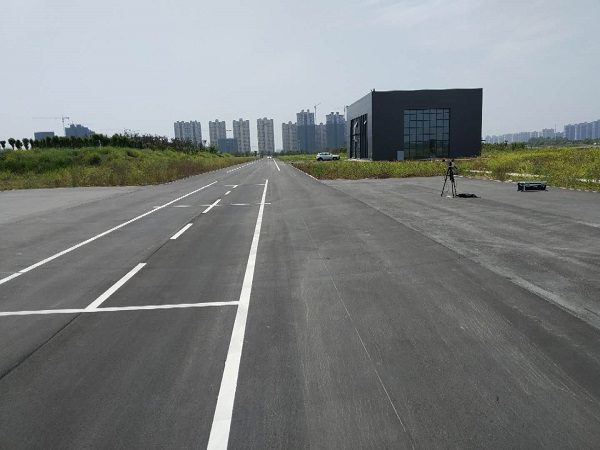
Pass-by noise testing requirements and operating precautions
Pass-by noise tests use an unladen vehicle without a trailer or semi-trailer, F time weighting and A-weighted sound pressure levels over 0–20,000 Hz. Calibration readings must differ by no more than 0.5 dB.
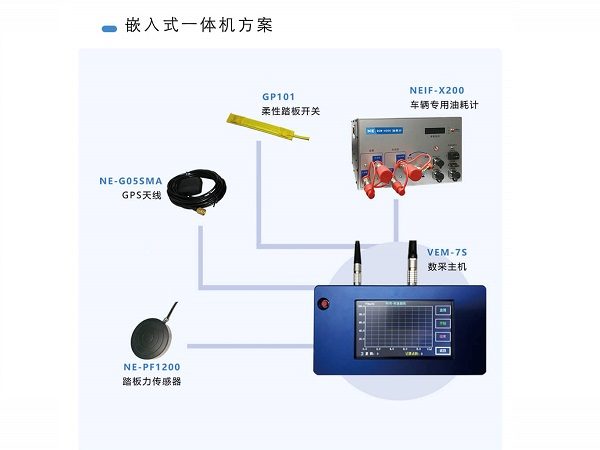
Power-performance road tests: test conditions and vehicle preparation
Power-performance road tests require a flat, firm, dry and clean road with a straight section at least 2 km long, no rain or fog, relative humidity below 95%, temperature of 0–40°C and wind speed below 3 m/s.
Vehicle braking performance: evaluation criteria and road-test method
Three common braking performance indicators are braking effectiveness, consistency of effectiveness and directional stability under braking. Road testing provides a practical assessment of these characteristics.
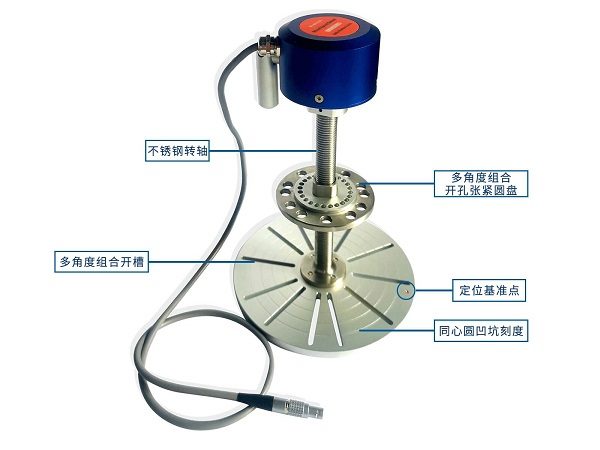
Wheel speed sensors in ABS testing: functions and installation
Wheel speed sensors send rotational-frequency signals to the ABS test acquisition unit. The sensor head is generally attached to the wheel steering assembly, with a toothed ring on the hub rotating with the wheel.
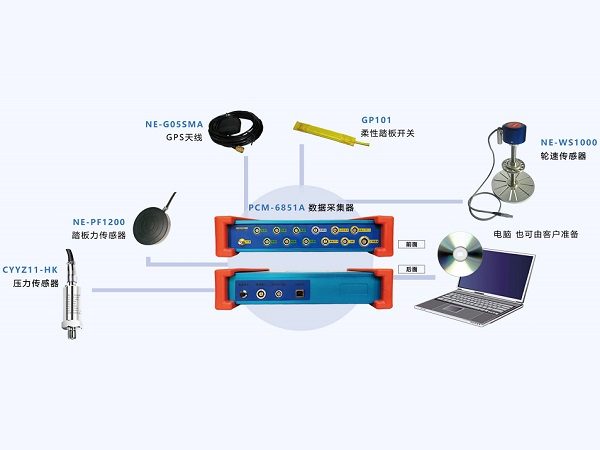
ABS test systems: operating principle and sensor functions
During emergency braking, the acquisition unit records and stores vehicle speed, wheel speed and brake inlet pressure signals from the sensors. Computer software then analyses the measurements.
ABS testing methods and performance evaluation
ABS performance is tested through outdoor road tests using dedicated ABS test systems, or indoor bench tests using roller-type inertia brake rigs.
Vehicle fuel economy: evaluation indicators and test methods
Vehicle economy is expressed through fuel consumption: the ability to complete transport work with less fuel. Indicators include constant-speed consumption per 100 km and driving-cycle consumption.
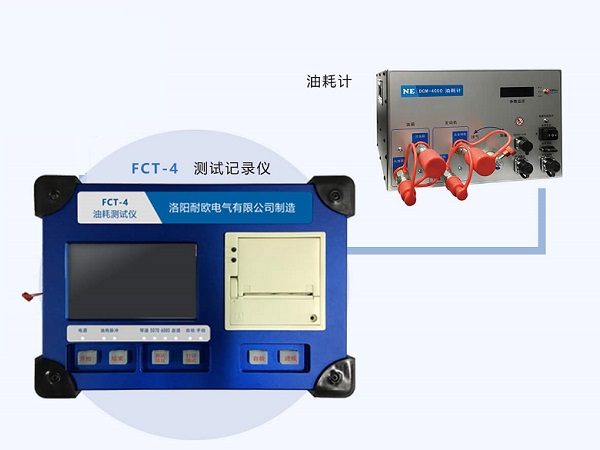
Fuel consumption test methods and measuring equipment
Common fuel-consumption methods measure constant-speed consumption per 100 km or driving-cycle consumption. Principal equipment includes chassis dynamometers and fuel-consumption test systems.
Speed sensors for vehicle performance testing and GPS sensor characteristics
Speed sensors must provide stable, reliable operation, consistent specifications, fast response, accurate measurement, maintainability and value for money. GPS speed sensors can meet these testing needs.