
A vehicle's ability to stop depends on its braking performance. Strict testing is needed after design and manufacture. Performance changes with use and is affected by associated components, making evaluation demanding.
1. Evaluation criteria
- Braking effectiveness: the basic braking capability, or the magnitude of braking force.
- Consistency of effectiveness: principally resistance to thermal fade, reflecting the ability to sustain braking.
- Directional stability under braking: whether the vehicle deviates from its intended direction.
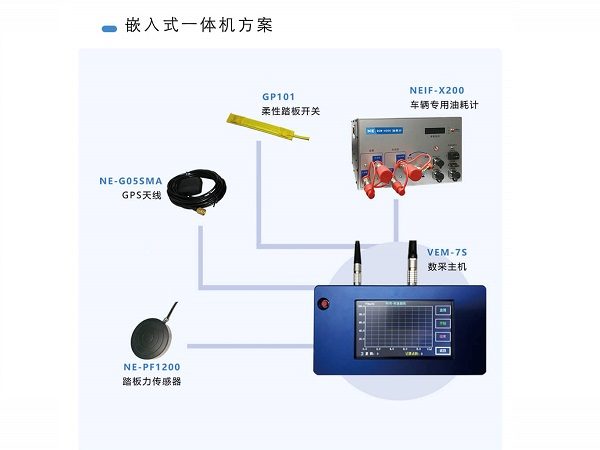
2. Road testing
Road tests are commonly used by vehicle evaluators. They reflect practical driving behaviour and assess the complete vehicle's braking capability, although they do not measure individual wheel forces. A common result is stopping distance from 100 km/h.
- Fit the braking measurement system: GPS antenna, pedal-force sensor, flexible pedal switch and associated instruments, each connected to the acquisition unit. An integrated embedded instrument is another option. Power the installed system before testing.
- Accelerate above 100 km/h and allow the vehicle to decelerate freely. When speed falls to 100 km/h, apply the brakes fully to stop in the shortest distance. Measure from the point of brake application to complete standstill.
- The historical article gives typical passenger-car stopping distances of 33–48 m and describes 33–37 m as very good, 37–41 m as good and 41–45 m as acceptable. It notes that exceeding 45 m indicates comparatively poor performance, rather than necessarily proving non-compliance.
Luoyang Naiou Electric manufactures vehicle braking test systems and associated sensors, and can provide different solutions for customer requirements. Please leave an enquiry or contact customer service.