
Vehicle power performance affects transport efficiency. Testing before factory release includes bench and road methods. Road tests provide a broad assessment only when the required test conditions are met.
1. Test conditions
Environment, instruments and equipment
- Unless otherwise specified, use a clean, dry, level paved straight road, 2–3 km long and at least 8 m wide, with longitudinal gradient within 0.1%.
- Except for tests with specific weather requirements, conditions should be free of rain and fog, with relative humidity below 95%, temperature 0–40°C and wind speed no greater than 3 m/s.
- Measuring instruments must be metrologically verified and meet accuracy requirements.
- Coastdown tests use a fifth wheel or non-contact speed instrument with accuracy at least 0.5%; close the doors and windows.
- Gradeability testing uses a stopwatch, 50 m steel tape, markers, engine tachometer and gradient instrument.
Road requirements
Use flat, hard, dry, clean asphalt or concrete with a straight section at least 2 km long; large vehicles require greater length. Width is at least 8 m and longitudinal gradient within 0.1%. Maximum-speed testing uses the straight section of a high-speed test-track loop.
A gradeability slope should approach the vehicle's maximum gradient, be at least 25 m long and have an 8–10 m level approach. Gradients of 30% or more use concrete; gentler slopes may use asphalt. Provide a 10 m speed-measurement section halfway up. A smooth, firm natural slope with uniform gradient may substitute. Slopes above 40% require a safety restraint.
2. Vehicle preparation
- The body should be straight and visually balanced. The height difference between symmetrical outer points is generally no more than 40 mm.
- The source specifies steering free-play limits from centre in either direction using a 10° threshold for vehicles with a design maximum speed of 100 km/h and a 15° threshold for vehicles below 100 km/h. Excessive free play can indicate large gear-mesh clearance or looseness in the steering pivots, affecting stability.
- Clutch pedal free travel must be correct.
- The engine must run smoothly with stable idle and no backfiring.
- The drivetrain and running gear must have no abnormal noises.
- There must be no oil, water or air leakage after stopping.
- With the accelerator fully depressed, check that the throttle or high-pressure fuel-pump control reaches its specified maximum opening.
- Check tyre pressure: insufficient pressure increases rolling resistance, shortens coastdown and raises consumption. Front and rear pressures must be within ±10 kPa of the specified values.
- Check or adjust wheel alignment at the mass/loading condition specified in the technical documentation.
- All assemblies and devices must work correctly. Spare tyres, tools and accessories must occupy their specified positions.
- Fuel, lubricants and brake-fluid grades must meet the vehicle technical requirements or applicable standards. Apart from reliability, endurance and service trials, all performance measurements within the same test must use the same batches.
3. Test load
Unless specifically stated otherwise, load to the manufacturer's maximum payload or maximum gross mass. Distribute and secure the load evenly so its mass does not change during testing. Use the occupant masses below; equivalent ballast may substitute.
| Vehicle / occupant | Person (kg) | Luggage (kg) | Seat ballast | Floor ahead of seat | Roof handhold | Luggage area |
|---|---|---|---|---|---|---|
| Truck, off-road, special-purpose, tipper or tractor | 65 | — | 55 | 10 | — | — |
| Long-distance bus | 60 | 13 | 50 | 10 | — | 13 |
| Public bus, seated | 60 | — | 50 | 10 | — | — |
| Public bus, standing | 60 | — | — | 55 | 5 | — |
| Tourist bus | 60 | 22 | 50 | 10 | — | 22 |
| Passenger car | 60 | 5 | 50 | 10 | — | 5 |
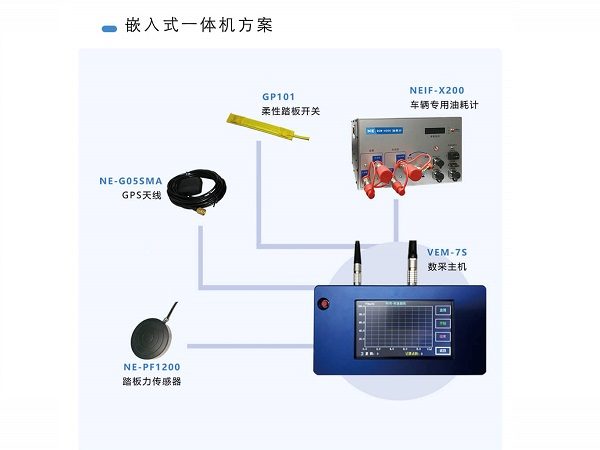
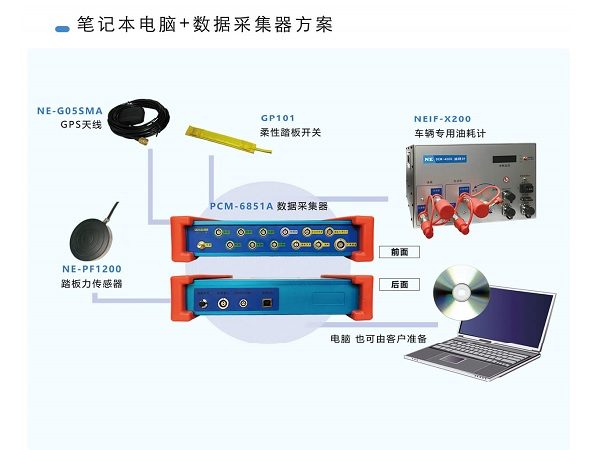
Luoyang Naiou Electric develops and manufactures complete power-performance road-test systems and associated peripheral sensors. Please leave an enquiry or contact customer service.