
Traffic noise includes tyre, wind and other vehicle noise heard as vehicles pass. Manufacturers measure pass-by noise to reduce and control it. The following requirements and standard references are retained from the historical article.
Vehicle preparation
- Use an unladen vehicle without a trailer or semi-trailer, except for inseparable combinations.
- For vehicles with two or more driven axles, use the drive configuration normally used on the road.
- Keep automatically operated cooling fans in automatic operation. Switch off work equipment such as concrete mixers or air compressors not serving the braking system.
Instrument settings
- Set time weighting to F. The article recommends A-weighted sound pressure level over 0–20,000 Hz and an automatic reading interval no greater than 30 ms.
- The difference between microphone calibrations before and after testing must not exceed 0.5 dB.
- Use an engine-speed or vehicle-speed instrument with accuracy better than ±2%, rather than the vehicle's onboard gauges.
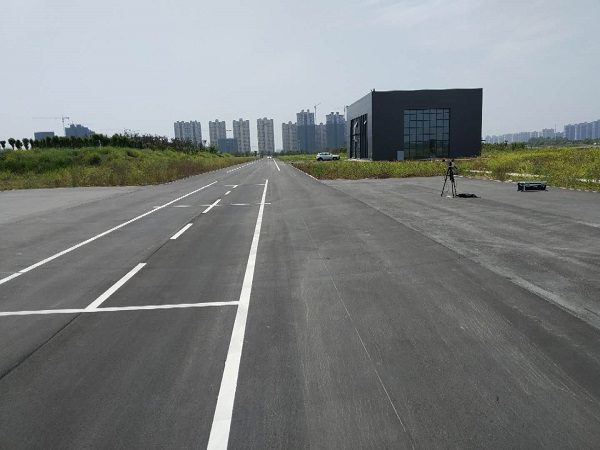
Sound pressure measurements
- Take at least four measurements on each side.
- Use the maximum sound level as the accelerating vehicle passes through the measurement zone. The source specifies subtracting 1 dB(A) from each reading.
- Four consecutive results on one side are valid when their difference does not exceed 2 dB(A).
- Calculate the arithmetic average of four readings for each side, and take the larger side average as the intermediate result.
Standard reference in the source
The historical source cites GB 1492-2002 and gives the following implementation stages for M1 passenger cars:
| Stage | Period | Noise limit |
|---|---|---|
| 1 | October 2002–December 2004 | 77 dB(A) |
| 2 | January 2005–June 2020 | 74 dB(A) |
| 3 | July 2020–June 2023 | 72 dB(A) |
| 4 | From July 2023 | 71 dB(A) |
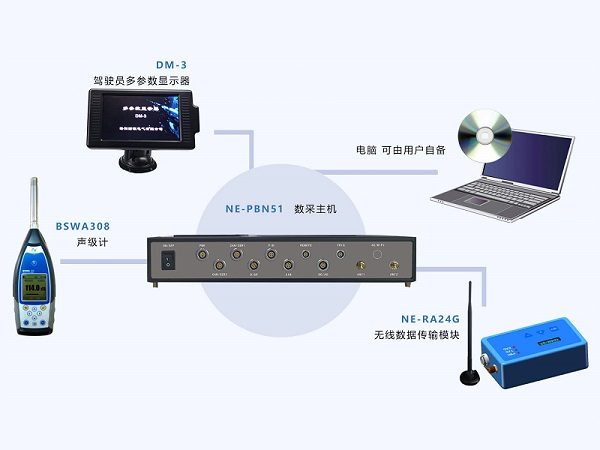
Operating precautions
- Select a windscreen, nose cone or random-incidence correction accessory according to environmental conditions.
- Set microphone distance and height according to the test procedure. Account for the operator and reflective surroundings, orient the microphone towards the vehicle's path and select the required frequency and time weighting.
- Determine whether background noise corrections are needed for each measurement point and frequency or weighting.
- Select input/output attenuation and measurement range so readings remain in the valid range with sufficient signal-to-noise ratio to avoid distortion.
Luoyang Naiou Electric designs and manufactures vehicle pass-by noise testing systems. Please leave an enquiry or contact customer service for details.