
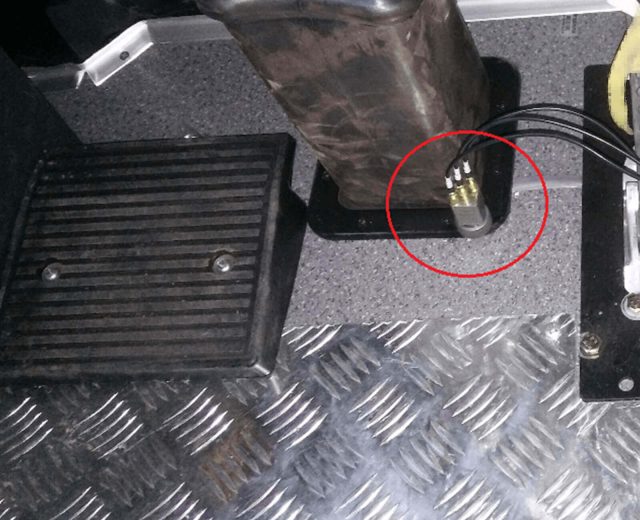
Three-axis vibration acceleration sensor
Overview
When a car is driving, uneven road surfaces and rotating parts such as the engine, drive train, and wheels will excite the car's vibration. In order to evaluate the comfort of the occupants, it also includes keeping the cargo intact for a truck. NE specifically integrates several IEPE three-axis vibration acceleration sensors. The product has the characteristics of high accuracy, low impedance, high signal-to-noise ratio, and low cost of supporting equipment. It is an ideal vibration measurement product in the field of vehicle testing.
Main features:
- Easy to install and easy to use
- Can be directly connected to a data collector with a built-in constant current source
- Low noise, high level, low impedance output, strong anti-interference ability, can transmit signals through long cables without causing noise increase
Technical specifications
Swipe horizontally to view all table columns.
| Country of origin | PCB, USA | Hebei, China |
| Range | ±50g pk | ±50g pk |
| Sensitivity | 100 mV/g | 100 mV/g |
| Frequency Range | 0.3~6,000 Hz | 0.5~10,000 Hz |
| Resonant frequency | ≥25 kHz | ≥30 kHz |
| In-band resolution (1 to 10,000 Hz) | 0.0001g rms | 0.0001g rms |
| Non-linearity | ≤1 % | ≤1 % |
| Overload limit (impact) | ±7000g pk | ±7000g pk |
| Operating temperature | -54~+80 ℃ | -20~+60 ℃ |
| Excitation voltage | 20~30 VDC | 12~30 VDC |
| Excitation current | 2~20 mA | 2~20 mA |
| Output impedance | ≤200 Ω | ≤200 Ω |
| Output bias | 8~12 VDC | 8~12 VDC |
| Signal line length | 3m, can be customized | 3m, can be customized |
| Installation method | M5 magnetic base | M5 magnetic base |
Applications
Three-axis vibration acceleration sensor applications.
Need selection advice or a quotation?
Submit your test items and vehicle type. The sales representative for your region will call you back.