
Anti-lock braking systems help prevent wheel lock during braking. Their performance must be evaluated under different road conditions. This historical article refers to GB 13594-2003, Performance and Test Procedures of Anti-lock Braking Systems for Motor Vehicles and Trailers.
Test methods
An important indicator is adhesion utilisation on surfaces with different adhesion coefficients: the ratio of maximum braking intensity while ABS operates to the available adhesion coefficient.
Outdoor road testing
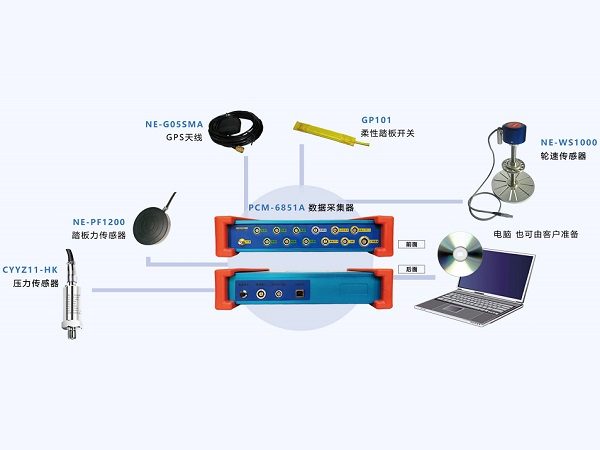
ABS aims first to improve stability during emergency braking on low-adhesion roads and also to shorten stopping distance. Road testing uses surfaces representing ice, snow, wet and dry conditions. Since these conditions rarely occur together naturally, dedicated proving grounds are used. The measurement system combines pressure sensors, wheel speed sensors, a pedal force sensor, a GPS speed sensor and a data acquisition unit.
Indoor bench testing
An ABS bench commonly consists of a roller-type inertia brake rig, signal acquisition system and computer control and analysis system. The stationary vehicle's wheels turn on rollers that simulate road adhesion and speed. Roller peripheral speed represents road speed; flywheel inertia represents vehicle kinetic energy. Different flywheel combinations match the inertia of a road test. Rotational speed and wheel brake pressure signals are recorded and analysed to evaluate ABS operation.
Performance evaluation
- Straight-line emergency braking on a uniform-adhesion surface: evaluates stopping distance, deceleration and lateral displacement.
- Emergency braking while steering, including obstacle avoidance and curved-path braking: evaluates yaw rate, sideslip angle and oscillatory motion.
- Practical performance and reliability under intensified road testing: evaluates pedal kickback and travel variation, false activation, body vibration, system noise and operating reliability.
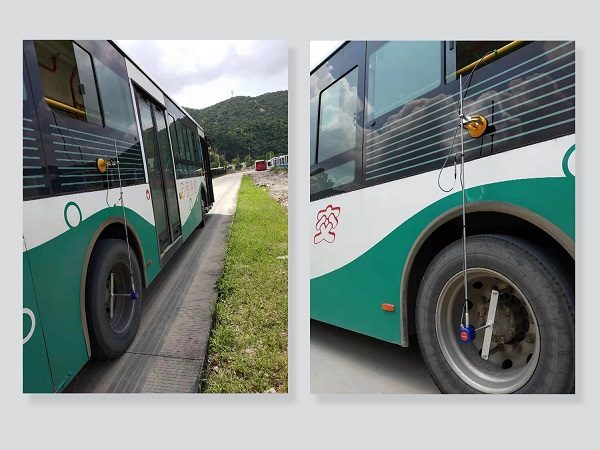
Luoyang Naiou Electric develops vehicle performance and ABS testing systems with associated sensors, and provides solutions for customer requirements. Please leave an enquiry or contact customer service for details.