
A steering wheel torque and angle instrument measures the effort and rotation angle used to steer a vehicle. The historical article introduces its sensing principle and two operating procedures.
Operating principle
A force-measuring mechanism and sensor convert steering effort into an electrical signal. An angular displacement sensor measures rotation angle; a pointer and graduated dial can also be used.
Align the instrument with the steering wheel centre and adjust its three telescopic clamps for a firm connection. Steering effort passes through the base, torque sensor and connecting fork to the vehicle's wheel. The torque sensor generates an electrical signal, while the photoelectric mechanism linked to the positioning rod converts angular movement into an electrical signal. The main unit collects, encodes, calculates, analyses, stores, displays and prints the measurements.
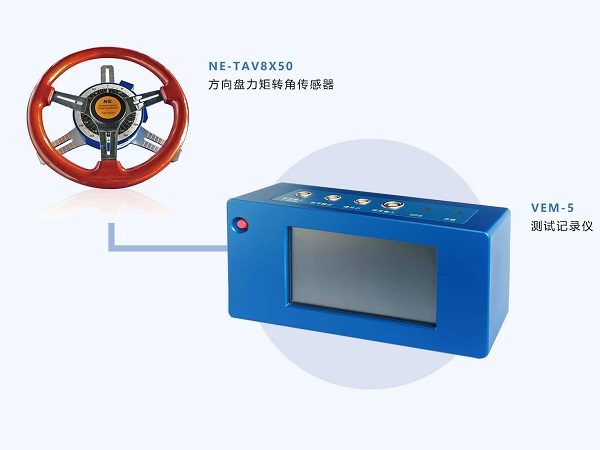
Measuring steering effort
Switch on the instrument, select left or right, set the peak/real-time selector to real time and release the hold function. Zero the angle and torque displays. Select peak mode and reset so the reading is close to zero. Operate the wheel according to the test procedure and record the torque after the manoeuvre. Use hold if a reading needs to be retained. This is the maximum steering torque. The original article describes converting the displayed torque to steering force by dividing by the wheel diameter.
Measuring steering free play
Start the vehicle and instrument, select the required left/right mode, release hold and use real-time mode. Zero the torque and angle readings. Turn the steering wheel to the left and right using the free-play measurement method and stop at the points where the road wheels begin to move. Record the angular interval between these limits. Use hold to retain the free-play reading.
Luoyang Naiou Electric researches, designs and manufactures automotive road test instruments, including steering torque and angle instruments. Please leave an enquiry or contact customer service for details.