
Vehicle stability is a major safety consideration from the design stage and an important purchasing factor. Tractors in particular need good lateral as well as longitudinal stability.
1. Definition
Stability is the ability to maintain or quickly recover the original driving condition under external disturbances. Its principal measures are longitudinal and lateral stability. Lateral stability is the resistance to side lean, lateral sliding and rollover when turning or travelling on a cross-sloped road.
2. How an anti-roll bar works
Maintaining lateral stability requires appropriate chassis design, including an anti-roll bar. When suspension deflection differs on the two sides and the body rolls relative to the road, one frame side moves towards its spring support and that bar end moves upwards relative to the frame. The opposite side moves away, and its bar end moves downwards. The central section has no relative displacement to the frame. The longitudinal arms therefore deflect in opposite directions, twisting the bar and bending its side arms, which increases suspension roll stiffness.
The principal purpose is to prevent excessive body roll during cornering, reduce rollover risk and improve ride behaviour. The bar is a U-shaped torsion spring made from spring steel, mounted transversely at the front or rear. Its central portion is connected to the frame through bushes, and its ends attach to the left and right lower suspension arms or damper struts.
3. Lateral-stability testing system
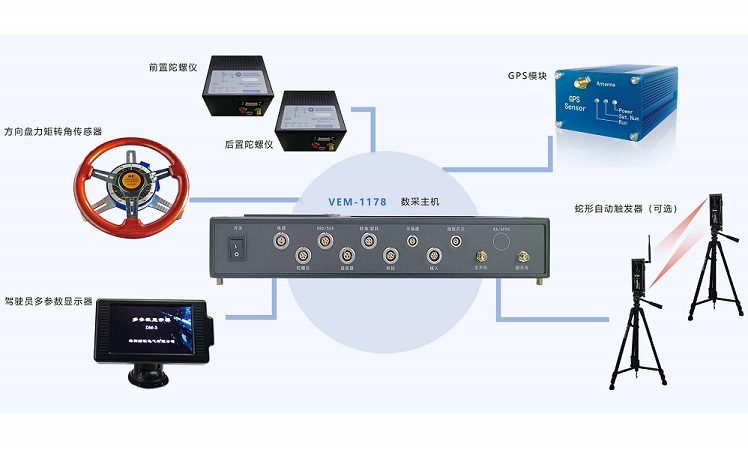
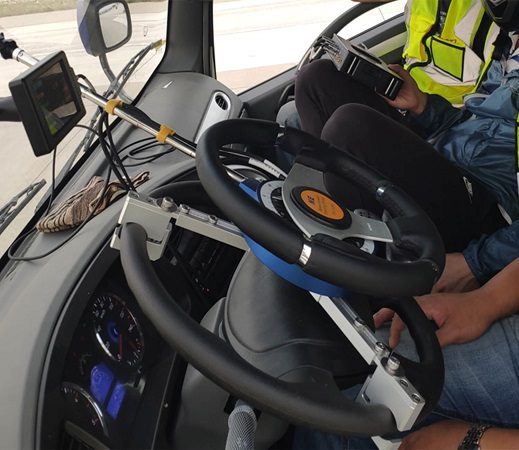
Manufacturers need accurate instruments and repeated tests under different vehicle and road conditions. Naiou's intelligent lateral-stability system uses a gyroscope, automatic slalom trigger, driver multi-parameter display, steering torque/angle sensor and associated equipment. Its acquisition and analysis functions and coordinated hardware/software operation support rapid report generation.
The system covers most tests in the relevant provisions. Principal measurements include vehicle speed, understeer, average peak yaw rate, lateral acceleration at the centre of mass and rearward lateral-acceleration amplification. It is suitable for commercial-truck safety testing.
Luoyang Naiou Electric also develops acceleration, fuel-economy, braking and other vehicle performance systems. Please leave an enquiry or contact customer service for a detailed testing solution.