
Noise pollution is a major concern in modern society, particularly for people living beside roads. Vehicle standards therefore specify noise limits. The sound measured as a vehicle passes a microphone is known as pass-by noise. This article introduces the testing methods and site requirements.
1. Pass-by noise testing methods
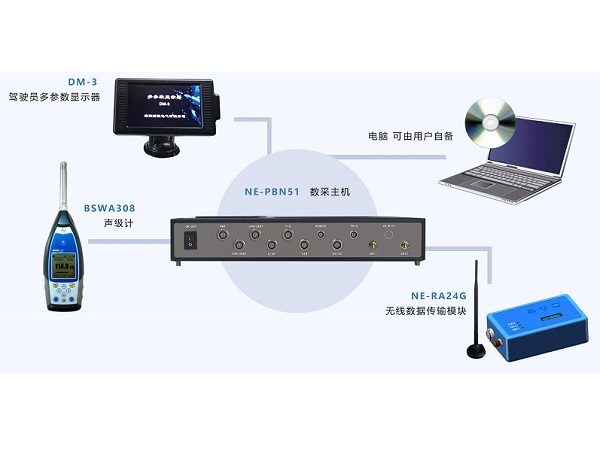
Tests reproduce the conditions experienced by residents and pedestrians. A dedicated test system measures noise using microphones on both sides of a test road. The maximum A-weighted sound level, in dB(A), is used as the pass-by noise result.
Outdoor testing
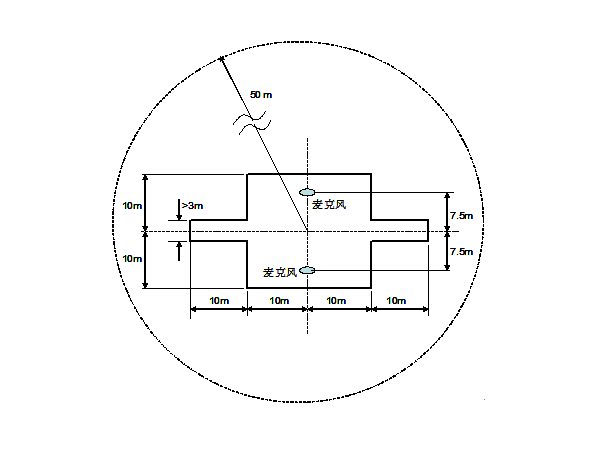
The outdoor site described here has a 20 m by 20 m central area, a 10 m approach and a 10 m exit, each at least 3 m wide, with connecting roads for vehicle access. Microphones are positioned on the transverse centre line, 7.5 m ±0.05 m from the longitudinal centre line and 1.2 m ±0.02 m above the ground.
Entry and exit speeds depend on vehicle type and transmission. A typical entry speed is 50 km/h. The vehicle follows the centre line. At the entrance to the measurement area, the driver applies full throttle as quickly as possible and maintains full engine load until the rear of the vehicle passes the exit line, then releases the accelerator.
At least four measurements are taken on each side. The difference between the maximum noise levels in any two of those measurements must not exceed 2 dB; otherwise additional measurements are required.
Indoor laboratory testing
Outdoor testing is simple, convenient and comparatively inexpensive, but is restricted by wind, rain and seasonal conditions. Some companies therefore use large semi-anechoic laboratories. The vehicle remains stationary on a roller test bench while its wheels turn. Rows of microphones on both sides measure noise at different vehicle positions to simulate movement.
Indoor testing is independent of weather. Engineers can move around the operating vehicle to observe sources, remove intake, exhaust or other systems to identify their contributions, and investigate the relationship between sound sources and microphone positions. Its disadvantages are the difficulty of reproducing actual tyre-road interaction and high laboratory maintenance costs.
2. Test-site requirements
- Acoustic environment: no significant obstacles such as buildings, walls, bridges or rocks within a 50 m radius. Objects near microphones must not affect the sound field; nobody should stand between a sound source and microphone.
- Background noise: normally at least 15 dB below the vehicle noise and never less than 10 dB below it.
- Road surface: concrete, joint-free asphalt or another hard, non-absorbing material. The surface should be very flat, with deviation no greater than ±0.05 m.
- Weather: the temperature range given in the source is 0–40°C. Wind speed at microphone height must not exceed 5 m/s, and testing must not take place in rain.
Luoyang Naiou Electric researches, designs and manufactures vehicle performance testing systems, including pass-by noise systems and associated peripheral sensors. For further information, leave an enquiry on our website or contact customer service.