From combustion-engine sound to electric-vehicle pedestrian alerts, vehicle noise affects performance, comfort and road safety. Testing now goes beyond a simple sound level reading to cover multiple scenarios and operating conditions under domestic standards and UNECE regulations.
1. From basic conditions to comprehensive coverage
Earlier tests focused mainly on acceleration and steady-speed noise. Broader vehicle types and operating scenarios now require more complete acoustic assessments.
Moving-vehicle tests include acceleration, steady speed and high speed. The source refers to GB 1495, Limits and Measurement Methods for Noise Emitted by Accelerating Motor Vehicles, and UNECE R51 for test sites, equipment and acceleration procedures. Measurements cover exterior and interior noise at different speeds and road conditions, addressing environmental limits and cabin comfort.
For electric vehicles, low-speed pedestrian alert testing is important. The source cites GB/T 37153-2018 and UNECE R138 for sound pressure and frequency characteristics, ensuring audibility without unnecessary noise.
Special conditions include reversing alerts, for which the source cites GB/T 44038-2024, and right-turn alerts under GB/T 38694-2020, intended to address blind spots and the turning risks of large vehicles. Starting, braking and idling noise are also measured to identify abnormalities and support optimisation.
2. Higher compliance expectations
Regulatory revisions, market demand and development of test methods are driving the change. The article describes R51 methods closer to real driving, R138 acoustic safety provisions for quiet vehicles, and domestic requirements for methods, equipment and accuracy across different vehicle types and operating conditions. Inspection organisations need suitable technical competence and qualifications.
Consumers increasingly value quiet cabins, making acoustic performance important to premium vehicles. Manufacturers need accurate development data and compliance with domestic and international requirements.
Testing organisations must invest in equipment and staff familiar with relevant regulations, accommodate multiple vehicles and scenarios, and explore automated methods to improve efficiency and accuracy.
3. Accurate testing for better mobility
The expansion from basic functions to vehicle quality reflects parallel advances in testing and standards. More precise, comprehensive noise evaluation supports the public environment and occupant comfort. Intelligent connected and new-energy vehicles introduce further topics, including sound interaction during automated driving and electric powertrain noise.
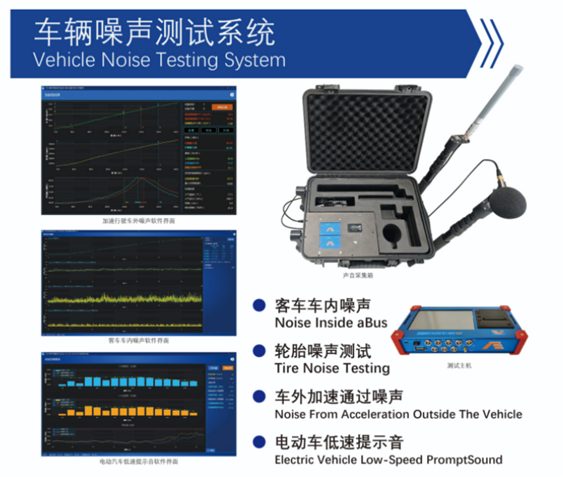
Naiou's independently developed vehicle noise testing system combines onboard equipment and ground measurement equipment. Ground units transmit data wirelessly to the processing system. Applications include interior noise, exterior noise, electric-vehicle low-speed alerts and stationary noise tests.