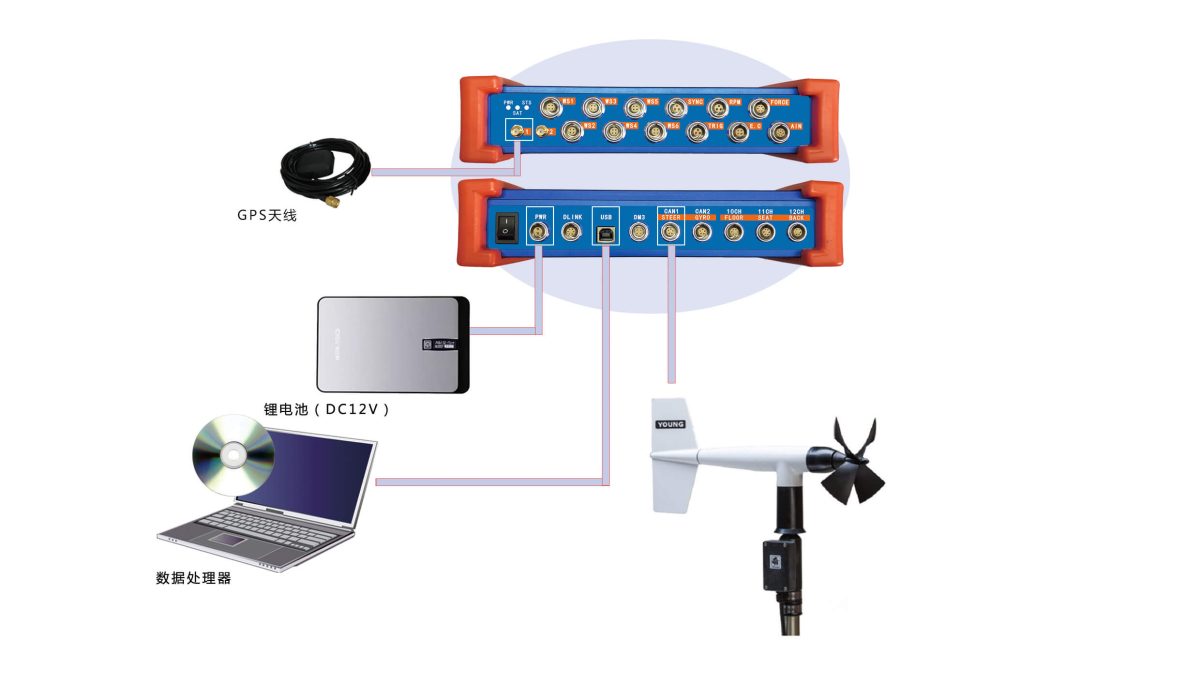
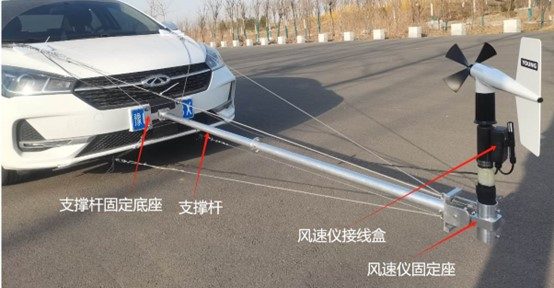
Accurate measurement of road-load coefficients directly affects vehicle emissions and fuel consumption test results. Onboard coastdown testing is widely used because its equipment is convenient to install.
During a coastdown test, the vehicle decelerates freely from a higher to a lower speed with the powertrain output disconnected, under specified environmental and site conditions. The system records the time and initial and final speeds for each deceleration interval.
The onboard road-load coastdown system supports data acquisition and analysis with reference to SAE J2263-2020 and Annex CC of GB 18352.6-2016, Limits and Measurement Methods for Emissions from Light-duty Vehicles (China 6).
Functions and features
- A high-accuracy imported weather sensor combines wind speed, wind direction, atmospheric pressure and temperature measurements, with quick installation.
- An imported vehicle-speed module supports BeiDou, GPS and GLONASS.
- Configurable speed segments reduce test-site requirements.
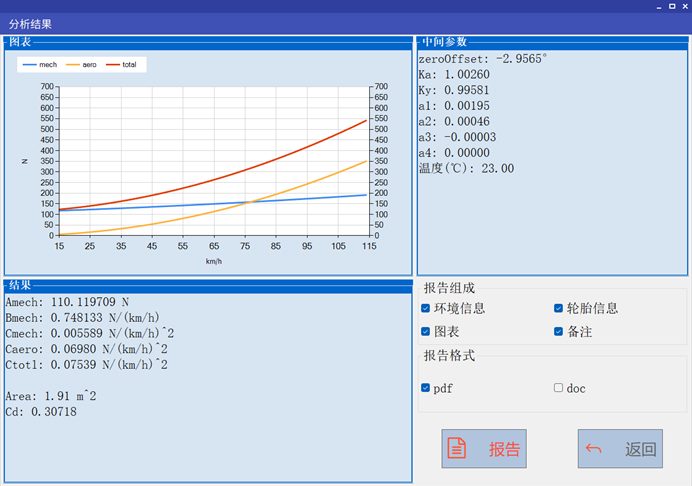
- A user-friendly acquisition interface displays dynamic curves alongside collected data.
- A complete workflow covers zero calibration, blockage calibration and data acquisition.
- File management follows the test sequence, with one-click analysis and no manual intervention during processing.
- Highly automated analysis and clear result presentation.
- Test reports can be generated in PDF or DOC format.
- Sensor calibration functions are included.