
Portable braking performance instruments are used for road tests to measure braking distance, braking time and initial speed. Results can be calculated and printed by computer. Instrument accuracy must meet the applicable requirements. This historical article describes the following operating and calibration conditions.
Operating requirements
- Acceleration range: −19.62 to 19.62 m/s².
- Display resolution: acceleration 0.01 m/s², speed 0.1 km/h, time 0.01 s and distance 0.1 m.
- The main unit and printer have their own power supplies. The main unit operates continuously for at least 5 h.
- The internal clock, including date and time, continues after power-off; stored test data must not be lost or changed.
- Basic error limits: ±0.1 m/s² within −4.91 to 4.91 m/s², and ±2.0% in the other ranges.
- Repeatability error must not exceed half the absolute basic error limit.
- Discrimination threshold: no greater than 0.05 m/s².
- Zero drift: no greater than ±0.05 m/s².
- With supply voltage varying from −20% to +15% of nominal, the indication change must not exceed half the absolute basic error limit.
- Within an ambient temperature range of 0–40°C, the indication change for each 10°C change must not exceed half the absolute basic error limit.
- A low-voltage indication appears when battery voltage falls below 90% of nominal.
- The radio-frequency electromagnetic field immunity test is Class I. During and after the test, the main unit and sensor must have no electrical fault; display and recording remain normal and stored data remain unchanged.
- During and after vehicle ignition interference testing, display, recording and printing operate normally.
- After high-temperature, low-temperature and damp-heat tests in its carrying case, appearance and basic error meet the applicable requirements.
- After fixed-frequency vibration testing in transport packaging, no components are loose or damaged, and appearance and basic error still meet the requirements.
Calibration conditions
Regular static and dynamic calibration is needed to maintain accuracy.
- Ambient temperature: 0–40°C; relative humidity: no greater than 85% RH.
- A static calibration fixture with a platform has a rotation range of at least 0–180°, angle resolution no greater than 0.1° and angular indication error no greater than ±0.2°.
- Spirit-level resolution: no greater than 1 mm/m.
- The reference vehicle speed instrument has speed indication error no greater than ±1.0% and resolution no greater than 0.01 km/h.
- Its distance indication error is no greater than ±1.0% and resolution no greater than 0.01 m.
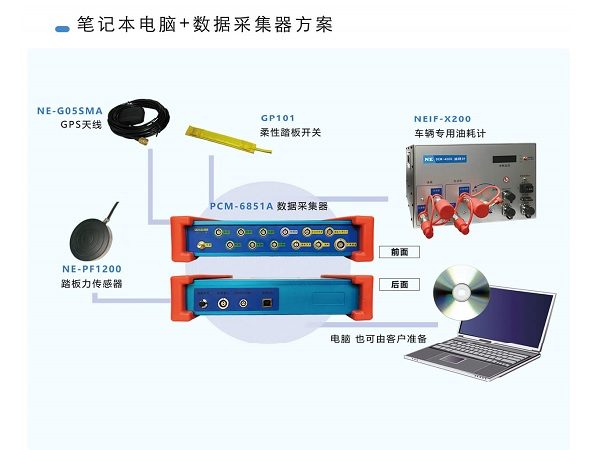
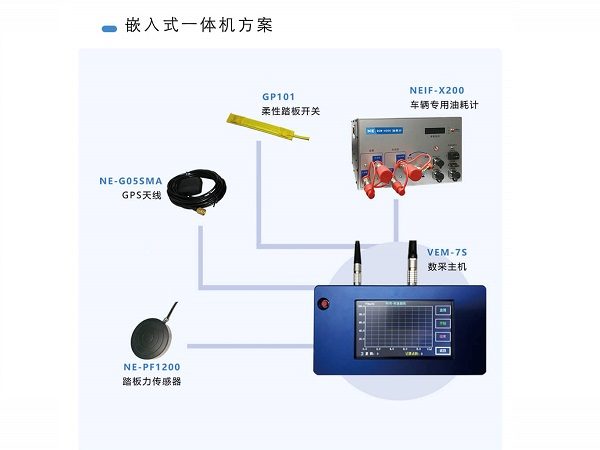
- The reference speed instrument includes a pedal trigger switch.
- Test supply voltage tolerance does not exceed ±1% of nominal.
- Supply voltage ripple does not exceed ±0.2% of nominal.
Luoyang Naiou Electric develops vehicle performance testing systems, including portable braking instruments and complete braking test solutions. Please leave an enquiry or contact customer service for details.