
A portable braking instrument calculates mean deceleration from braking time, distance and the deceleration-sensor output. Periodic calibration is needed because several factors affect accuracy.
1. Calibration methods
The calibration scope described includes appearance, static calibration, dynamic calibration and data retention. A static fixture and spirit level are used for static calibration, while an optical non-contact speed instrument provides the dynamic reference. MFDD results from both approaches are used to assess performance.
Static calibration
Mount the instrument correctly on the fixture and level it. Measure at 12°, 24°, 37°, 53° and 90°. Repeat each point three times and use the mean indication to calculate error and repeatability in two ranges. For 0–4.90 m/s², the maximum indication error is ±0.10 m/s². For 4.91–9.81 m/s², it is ±2.0%. Repeatability must not exceed half the absolute value of the maximum permitted indication error.
Dynamic calibration
Place the instrument and reference device in the same vehicle with stable performance. Perform three braking tests each at approximately 30 and 50 km/h. Calculate mean-deceleration indication error for every point and run as prescribed. The maximum permitted MFDD error stated is ±5.0%.
2. Precautions
Level the static fixture to within one division on a stable, firm bench. Orient the sensor's indicated forward direction perpendicular to the fixture's angle-rotation axis to prevent indication errors.
- Calculate static error and repeatability separately for 0–4.90 and 4.91–9.81 m/s². The first range uses an absolute tolerance, the second a relative tolerance. Keep significant figures consistent for error, repeatability and uncertainty.
- For discrimination-threshold calibration near 37°, note the opposite rotation directions: move forward by 0.1° in the 37.3–37.4° range, then reverse by 0.1° in the 36.7–36.6° range.
- Use a stable-braking vehicle, good road and straight-line travel for dynamic calibration. Install the sensor horizontally, arrow forward, and tighten its screws. Acquire data after the vehicle has stopped; do not touch the brake pedal after entering ready mode.
- At approximately 30 and 50 km/h, collect three runs each and compare instrument and reference indications. As exact speed control is difficult, aim to remain within ±5 km/h to reduce uncertainty and experimental error.
- Use consistent significant figures for dynamic results and uncertainty, and consistent units.
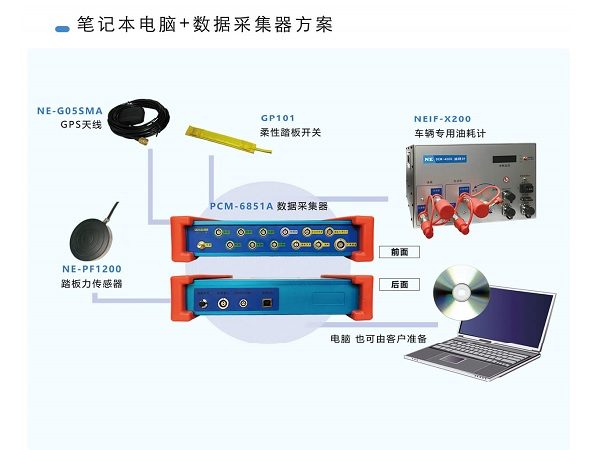
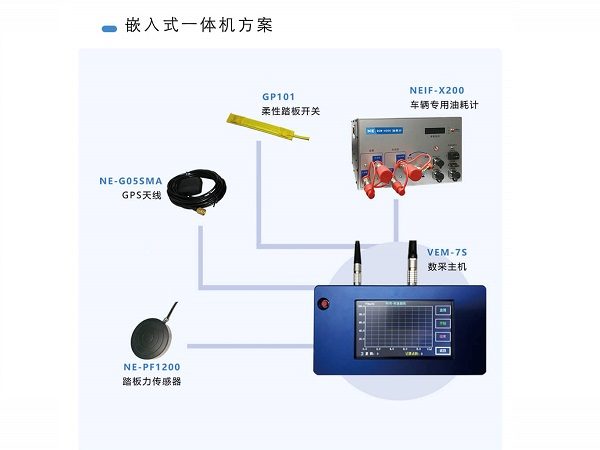
Accurate calibration directly affects braking inspection results. Luoyang Naiou Electric offers several vehicle braking-test arrangements. Please leave an enquiry or contact customer service.