
Braking is a critical safety function, inspected during vehicle development, factory release and subsequent vehicle inspections. It is a complex system, so accurate measuring equipment is essential.
Equipment types
Non-contact motion analysers and fifth-wheel instruments measure stopping distance. Portable braking instruments measure mean fully developed deceleration (MFDD) and brake response/coordination time. Roller reaction benches measure braking force, while plate benches measure force and response time. Inspection organisations commonly use roller or plate benches for bench testing and portable instruments for road testing. Naiou's braking system is a portable road-test instrument.
Plate brake bench
This is a low-speed dynamic inertia bench. The vehicle enters at 5–10 km/h, the transmission is placed in neutral and emergency braking is applied. Each wheel produces a reaction on its plate equal and opposite to braking force. The plates move longitudinally and force sensors measure each wheel's braking force. The process resembles actual braking and reflects axle-load transfer and influences from other vehicle systems.
Roller reaction bench
The measured force is limited by the lesser of the brake's force and the tyre-roller adhesion force. Greater adhesion makes the reading closer to the actual brake force. Roller surface material and shape, centre spacing, diameter and wheel placement angle affect adhesion.
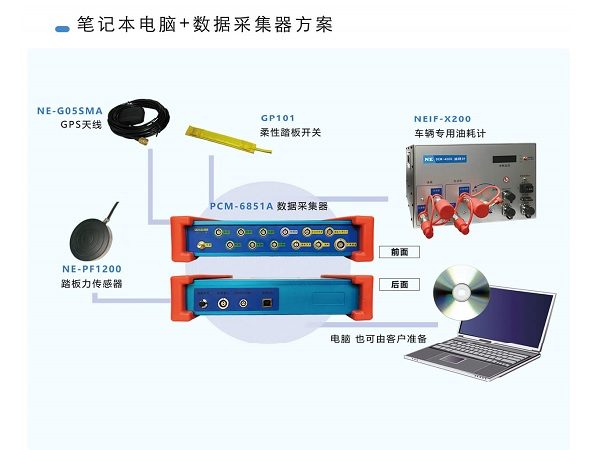
Portable braking instrument
This records the acceleration-sensor time history during braking, calculates speed and distance, and derives MFDD and coordination time in accordance with the GB 7258 requirements cited by the source. It supports on-site printing and data communication. Other measurements can include acceleration performance, instantaneous and peak acceleration, gradient and adhesion coefficient.
Naiou's accurate deceleration instrument is portable, quick to install and simple to operate. It supports rapid batch inspections and on-site examination of vehicles involved in road accidents.
Performance differences
Braking force is affected by suspension, leaf springs, front/rear force distribution and axle-load transfer. The source describes a plate test as reflecting these combined effects, while a roller test mainly measures the wheel/brake friction interaction. It gives an example of a vehicle with suspension failure passing a roller test but failing a plate test because poor road grip appears during actual braking.
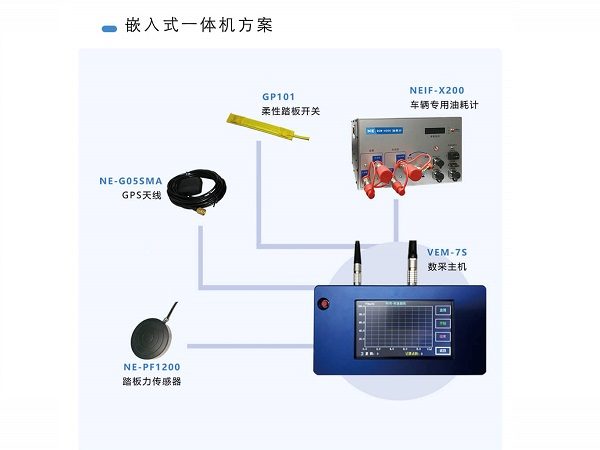
A portable instrument records deceleration, braking time and distance to calculate average deceleration. It helps evaluate vehicles that cannot be placed on a roller bench or whose bench results are questionable. Naiou's FPGA-based equal-precision speed algorithm supports rapid reporting. Braking and acceleration results can be stored in the instrument and printed by a microprinter, or analysed further on a computer with plotted curves.
Luoyang Naiou Electric provides braking test systems and matching peripheral sensors configured to individual requirements. Please leave an enquiry or contact customer service.