
Road conditions, vehicle structure and speed contribute to vehicle noise. Pass-by noise combines several sources and is tested before factory release. This article describes system settings and site layout.
1. System settings
- Set time weighting to F. The source recommends A-weighted sound pressure level over 0–20,000 Hz. Automatic A-weighted readings should be taken at intervals no longer than 30 ms.
- The difference between microphone calibrations before and after the test must not exceed 0.5 dB.
- Use an engine-speed or vehicle-speed instrument with accuracy better than ±2%, rather than the vehicle's own instruments.
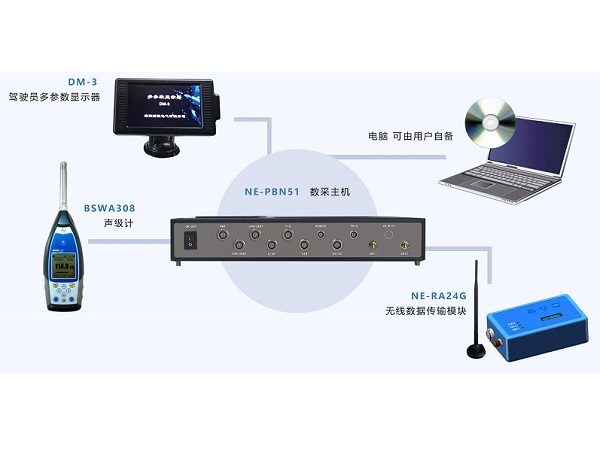
Sound-pressure measurements
- Measure at least four times on each side of the vehicle.
- Use the maximum sound pressure level while the vehicle accelerates through the measurement area, subtracting 1 dB(A) from each reading as specified by the source procedure.
- Four consecutive results on one side are considered valid when their spread is ≤2 dB(A).
- Take the arithmetic mean of the four results on each side, then use the higher of the two means as the intermediate result.
2. Test-site layout
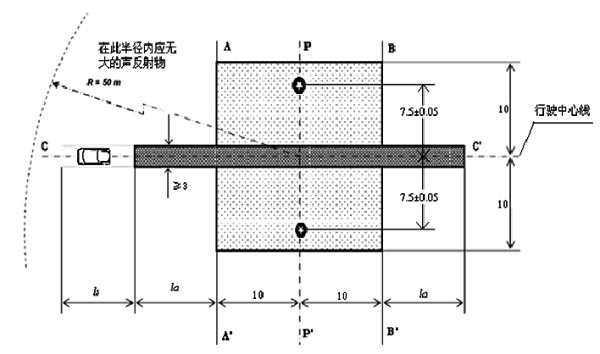
- No large sound-reflecting objects such as fences, rocks or bridges within 50 m of the measurement centre.
- No obstacles affecting the sound field near microphones, and nobody between the source and microphones.
- Wind speed below 5 m/s.
- A-weighted background noise at least 10 dB(A) below the test vehicle's noise.
- A level, firm road that does not generate excessive tyre noise.
- A dry surface, without snow, tall grass, loose soil, slag or other sound-absorbing material.
Exterior-noise controls cover trucks and buses as well as passenger cars, making pass-by noise part of complete-vehicle testing. Luoyang Naiou Electric manufactures pass-by noise systems and offers associated peripheral sensors. Please leave an enquiry or contact customer service.